



Tile laying patterns
14 January 2022
Tiles are no longer merely functional in the home. The on-trend colours, different shapes and textures can completely transform any room. But alongside the tile itself, the laying pattern is also important. A laying pattern can make your room appear taller, longer or wider. So will you choose the traditional half-bond pattern, the on-trend herringbone, a fully vertical layout or perhaps something creatively graphic? And what effect does this have on the room?
Read about the various options below, including some you may not have considered.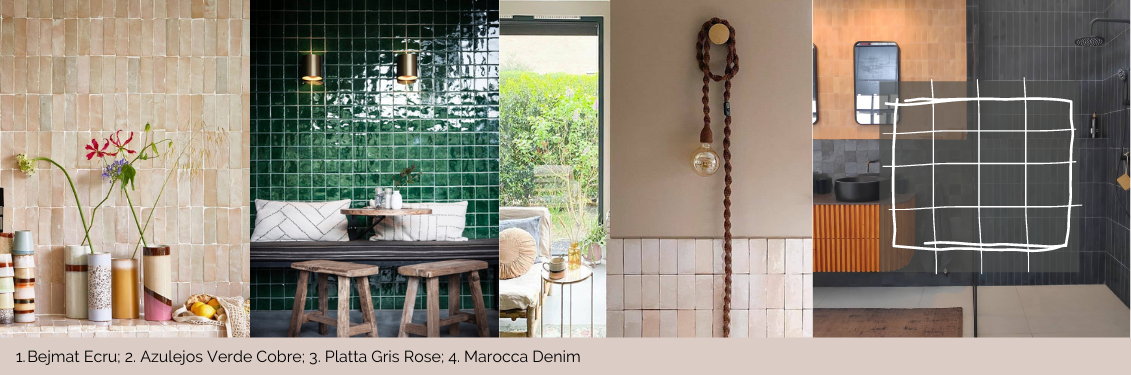
Stack bond
Stack bond is the most common laying pattern. Square or rectangular tiles are placed directly beneath one another to create a clean look. A particularly on-trend option at the moment is to place the elongated tile, such as the Spanish Cabrera or Natuursteen Brick, vertically. It creates a spacious, streamlined effect while still being creative.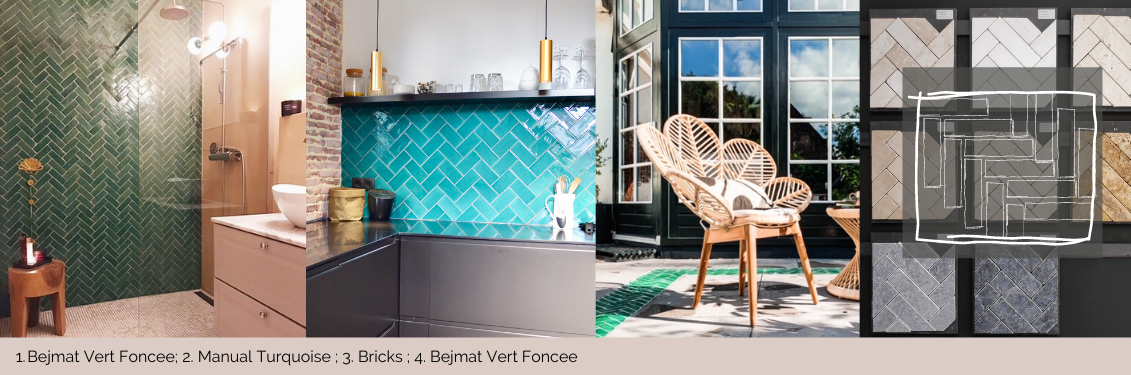
Herringbone
The herringbone pattern became popular through wooden herringbone flooring, but it also works perfectly on walls. The Moroccan Bejmat seem made for this laying pattern and are a real focal point! The elongated Spanish Cabrera or Ibiza are also beautiful. You often see this laying pattern combined with Scandinavian design in sea green, light grey or blue. The herringbone pattern is a real eye-catcher, so you can choose to use it on one wall while keeping the rest understated.
Half-bond pattern
A familiar laying pattern is the half-bond pattern. Just look outside: all around you, houses and pavements are laid in a half-bond pattern. In tiling, we know the metro tiles, which are offset by half a tile each time. The pattern is therefore both classic and playful. Would you like to do something creative with this pattern? You can alternate the tile size or colour, for example, or place the tiles vertically. Or take a square tile and lay it in a half-bond pattern!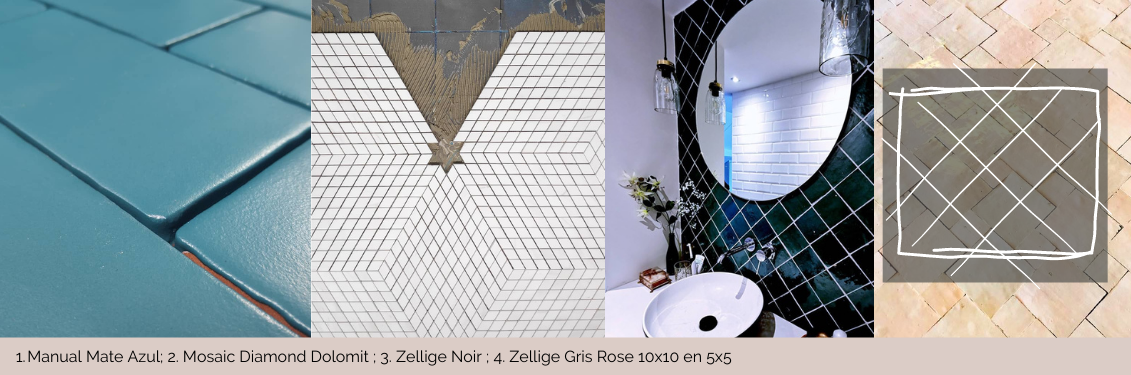
Diagonal pattern
The name says it all. Looking for a real eye-catcher? Lay your tiles at a 45-degree angle. This works with tiles in a stack-bond or half-bond pattern. This pattern usually makes your wall look wider; the downside is the cutting waste and the effort involved in laying it.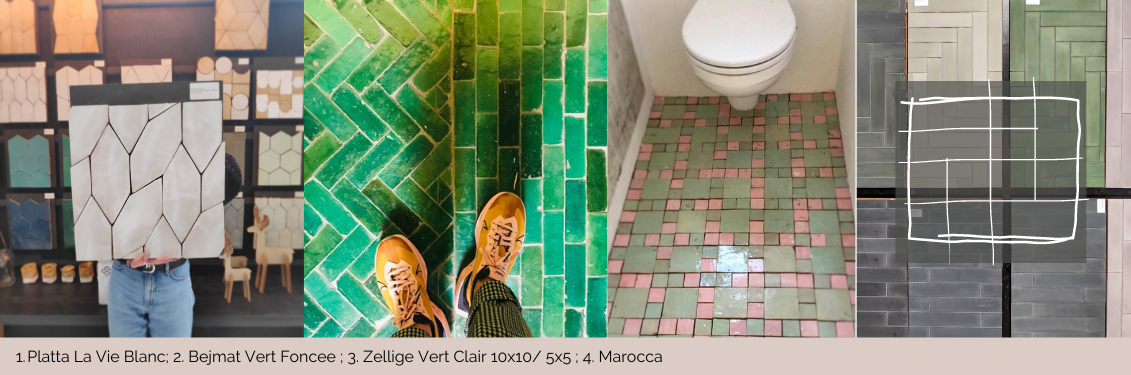
Random pattern
Would you rather not stick to a particular pattern at all? You can do that too! It has a name, namely a random pattern. We see this more often in farmhouses or with country-style pavers used indoors. You use different tile sizes in alternation, creating a playful pattern. You see this pattern more often on floors because it can only really be appreciated across large surfaces. However, it can also look very playful on a wall when used with small tiles.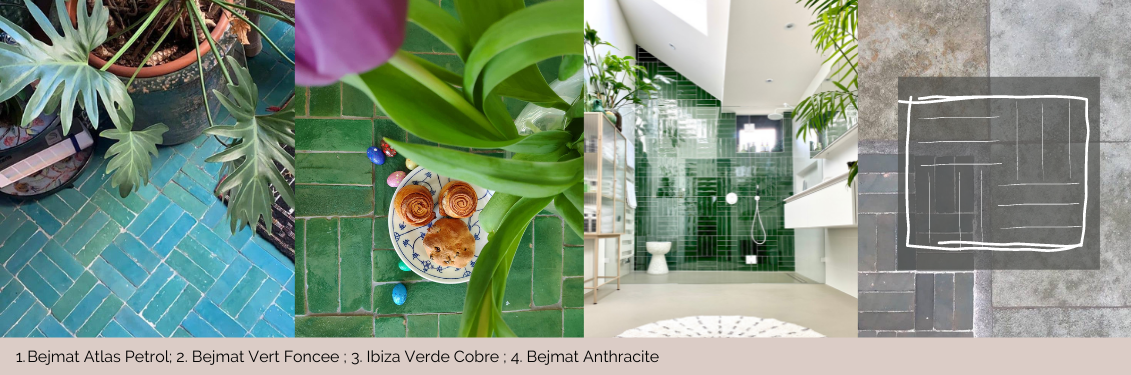
Block pattern
This pattern is particularly suited to small, elongated wall tiles. You combine several tiles to form one block, then place the blocks horizontally and vertically against one another. Always make sure that the blocks are the same height and width. The result resembles wickerwork or 1930s parquet. Here too, you can have fun combining colours. This pattern works particularly well on, for example, a worktop or floor with our Bejmat tile.